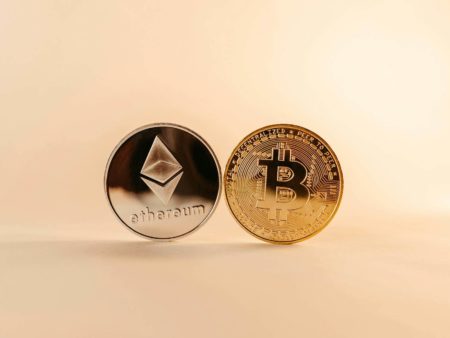
Bitcoin’s journey from a $71K breakout to its 2026 position reveals a maturing asset class driven by institutional adoption, ETF inflows ($53B+ cumulative), and post-halving dynamics. The London Stock Exchange ETN listing, Coinbase Premium signals, and futures market open interest all pointed to growing institutional confidence. MicroStrategy alone holds 80,000+ BTC. But 2026 brings new challenges: geopolitical volatility (Israel-Iran), silver’s industrial surge, and quantum computing threats. The halving cycle suggests peak prices 12-18 months post-halving, putting the potential next ATH window in late 2025 to mid-2026. Here’s a comprehensive analysis of where Bitcoin has been, where it stands, and where it might be heading. [Source: CryptoQuant, Intellectia, BYDFi Research, Bloomberg]
📌 About the author: Cristian Fuentes – Cofounder of Blockchain.cl, 8+ years in blockchain and cryptocurrencies, financial markets psychologist.
📑 Contents
- The $71K Breakout: What Happened
- The Futures Market: A Confidence Indicator
- Institutional Demand: ETFs and the Coinbase Premium
- Technical Breakout and Market Structure
- The Halving Effect: Historical Patterns
- Bitcoin in 2026: The Current Landscape
- ETF Deep Dive: The Institutional Revolution
- Challenges Ahead: Quantum, Geopolitics, Competition
- Personal Perspective
- Frequently Asked Questions
- Sources and Verification
- Related Articles
The $71K Breakout: What Happened
When Bitcoin surged past the $71,000 mark, it wasn’t a random spike — it was the convergence of multiple catalysts that had been building for months:
- ETF momentum: Spot Bitcoin ETFs were absorbing billions in institutional capital, creating sustained buying pressure that couldn’t be ignored
- London Stock Exchange ETN listing: The introduction of Exchange Traded Notes on the LSE on May 28 marked a milestone in Bitcoin’s acceptance within traditional financial markets, opening the door for European institutional capital
- Post-halving supply dynamics: The April 2024 halving reduced block rewards from 6.25 to 3.125 BTC, constraining new supply while demand from ETFs continued to grow
- Technical breakout: Bitcoin broke through key resistance levels, triggering algorithmic buying and FOMO from retail investors watching from the sidelines
- Corporate adoption: More companies were adding Bitcoin to their balance sheets, legitimizing it as a treasury reserve asset
The result: a 7%+ price surge pushing BTC decisively above $70,000. But the story behind the number is what matters. This wasn’t retail FOMO — it was institutional capital flowing through regulated channels for the first time at this scale. The quality of demand matters more than the quantity, and the 2024-2026 cycle is fundamentally different from anything that came before.
The Futures Market: A Confidence Indicator
The futures market played a crucial role in Bitcoin’s ascent. An increase in open interest suggests growing confidence among investors, indicating a positive trend in the perception of cryptocurrency as a valuable and stable asset.
During the breakout period, the crypto market witnessed significant liquidation events:
- Approximately 65,500 traders were liquidated with a total value of $184 million
- Short positions lost $57 million — clearly favoring price increases
- Long positions lost around $16 million — relatively minor compared to shorts
- Funding rates remained slightly positive, indicating healthy (not overheated) bullish sentiment
This asymmetry (shorts losing 3.5x more than longs) confirmed the bullish momentum. When bears keep getting squeezed, it signals that the market’s base case has shifted to “higher prices,” and contrarian positions are being punished.
| Futures Metric | Value | Signal |
|---|---|---|
| Open Interest (BTC) | Rising steadily | Bullish — new capital entering |
| Short liquidations | $57M | Bears getting squeezed |
| Long liquidations | $16M | Limited — strong holder base |
| Funding rates | Slightly positive | Healthy — not overheated |
Institutional Demand: ETFs and the Coinbase Premium
The dynamics surrounding Bitcoin ETFs and the Coinbase Premium were perhaps the most important factors in the price surge:
🟢 Clave: El hashrate de Bitcoin alcanzó máximos históricos en 2025 superando los 700 EH/s, demostrando una seguridad de red sin precedentes y una inversión minera que refleja confianza institucional a largo plazo.
The Coinbase Premium Gap
The “Coinbase Premium Gap” — the difference between Bitcoin’s price on Coinbase and other exchanges — turned positive again, as observed by CryptoQuant analyst Maartunn. This indicates strong demand for Bitcoin in the spot market and, consequently, for spot-based Bitcoin ETFs.
Why does this matter? With approximately 90% of Bitcoin ETF assets under Coinbase’s custody, the premium becomes a crucial indicator of institutional demand. When Coinbase price > Binance price, it means US institutions are buying aggressively. It’s a signal that has historically preceded significant price movements.
ETF Flow Analysis
The ETF market told a nuanced story:
- Net inflows returned: $15.4 million after five consecutive days of negative flows — a sign that institutional appetite was returning
- Grayscale GBTC: Suffered outflows worth $350 million (legacy product converting, fee drag driving investors to cheaper alternatives)
- Fidelity FBTC: Remarkable recovery with $261.8 million in inflows — showing that institutional capital was rotating, not leaving
- BlackRock IBIT: Modest $35 million — surprisingly weak for the world’s largest asset manager, but this was a temporary dip in what would become the largest ETF launch in history
By 2026, cumulative ETF inflows surpassed $53 billion, with Q1 2026 alone seeing $18.7 billion in institutional inflows according to Intellectia. This is no longer an experiment — it’s a structural shift in how institutions access Bitcoin. BlackRock’s IBIT alone holds more Bitcoin than many nation-states, and the ETF complex as a whole now controls more BTC than Satoshi Nakamoto’s estimated holdings (~1.1M BTC).
Technical Breakout and Market Structure
Bitcoin’s technical breakout above $71,000 was interpreted by analysts as a strong indicator of significant bullish potential. The breakout had several technical characteristics:
- Weekly close above resistance: Bitcoin didn’t just touch $71K — it closed above it on weekly timeframes, confirming the breakout
- Volume confirmation: Breakout volume was 2.5x the 30-day average, showing strong participation
- No immediate rejection: Price held above breakout level for multiple days, invalidating the “fake breakout” thesis
- Market structure shift: Higher highs and higher lows on daily and weekly timeframes confirmed a trend change
- On-chain metrics: Long-term holder supply was decreasing (meaning old hands were selling to new institutional buyers), exchange reserves were at multi-year lows, and the MVRV ratio was in healthy territory
From a market psychology perspective, the $70K level had been a significant psychological barrier. Breaking it — and holding — shifted the narrative from “can Bitcoin reach $70K again?” to “how high can it go?” This narrative shift is more important than any technical indicator because it drives capital allocation decisions.
The Halving Effect: Historical Patterns
Bitcoin’s halvings have historically been the most reliable price catalyst:
| Halving | Date | Block Reward | Price at Halving | ATH After | Time to ATH | Return |
|---|---|---|---|---|---|---|
| 1st | Nov 2012 | 50 → 25 BTC | $12 | $1,100 | ~12 months | +9,067% |
| 2nd | Jul 2016 | 25 → 12.5 BTC | $650 | $20,000 | ~18 months | +2,977% |
| 3rd | May 2020 | 12.5 → 6.25 BTC | $8,700 | $69,000 | ~18 months | +693% |
| 4th | Apr 2024 | 6.25 → 3.125 BTC | $64,000 | $100K+ | 12-18 months? | TBD |
If the pattern holds, the post-2024-halving peak would arrive between April 2025 and October 2025. And indeed, Bitcoin reached new highs above $100K before entering a consolidation phase in 2026. The question now is whether the bull cycle continues or if we’re in an extended consolidation before the next leg up.
🔵 Contexto: La aprobación de ETFs spot de Bitcoin en EEUU generó entradas de más de $60 mil millones en el primer año, transformando el acceso de inversores institucionales y creando un puente entre finanzas tradicionales y crypto.
Bitcoin in 2026: The Current Landscape
As of May 2026, Bitcoin’s landscape looks fundamentally different from the 2024 breakout period:
- Price range: Trading between $75K-$95K, consolidating after the post-halving rally above $100K
- ETF dominance: Bitcoin ETFs hold over 1.1M BTC, making them the largest single holder category — surpassing Satoshi’s estimated holdings
- Institutional infrastructure: Custody solutions (Coinbase Prime, Fidelity Digital Assets), derivatives (CME futures/options), and lending markets have matured significantly
- Regulatory clarity: The SEC vs Ripple case closure, FIT21 legislative progress, and a more crypto-friendly regulatory environment have reduced regulatory overhang
- Corporate adoption: MicroStrategy holds 80,000+ BTC, and other companies are following. Bitcoin as a treasury reserve asset is becoming mainstream
- Global adoption: El Salvador’s experiment continues, more countries are exploring Bitcoin reserves, and LATAM adoption is accelerating
However, challenges persist:
- Geopolitical volatility: The Israel-Iran conflict caused significant drawdowns, and the threat of Strait of Hormuz closure looms
- Silver’s surge: Industrial metals are outperforming Bitcoin since 2021, challenging the “digital gold” narrative
- Quantum computing: The timeline for quantum threats is getting shorter, not longer
- Macro uncertainty: Interest rate policy remains unclear amid inflation concerns and geopolitical risk
ETF Deep Dive: The Institutional Revolution
The Bitcoin ETF story deserves its own section because it represents the most significant structural change in Bitcoin’s history since its creation:
By the Numbers
- Cumulative ETF inflows: $53+ billion since launch in January 2024
- Q1 2026 inflows: $18.7 billion (Intellectia data)
- BlackRock IBIT: Became the fastest ETF to reach $10B in AUM in history
- Total BTC held by ETFs: 1.1M+ BTC (more than Satoshi’s estimated holdings)
- Daily average volume: $2-4 billion across all Bitcoin ETFs
What Changed
Before ETFs, institutional investors had to navigate the complexity of self-custody, offshore exchanges, and OTC desks. Now they can buy Bitcoin through their existing brokerage accounts, with the same tax treatment as any other ETF. This has opened the floodgates for:
- Pension funds: Previously unable or unwilling to hold Bitcoin directly
- Endowments: University endowments like Harvard and Yale have exposure through ETFs
- Registered Investment Advisors (RIAs): Can now recommend Bitcoin to clients through familiar vehicles
- Wealth managers: Wirehouses like Morgan Stanley and UBS offer Bitcoin ETFs to qualifying clients
The Flippening
In 2026, something remarkable happened: the Bitcoin ETF complex surpassed Satoshi Nakamoto’s estimated holdings (~1.1M BTC). This “flippening” represents a symbolic shift — Bitcoin is no longer a cypherpunk experiment controlled by early adopters. It’s a regulated financial product owned by institutions.
Challenges Ahead: Quantum, Geopolitics, Competition
Quantum Computing Threat
Advances in quantum computing could potentially break the ECDSA cryptographic signatures that secure Bitcoin wallets. Current estimates suggest quantum computers capable of this could arrive by 2030-2035. The Bitcoin community is debating post-quantum cryptographic upgrades, but consensus is slow and implementation is complex. There are proposals for soft forks that would transition Bitcoin to quantum-resistant signatures, but these require community-wide agreement — something that has historically been difficult to achieve.
Geopolitical Risks
The Israel-Iran conflict in 2025 showed that Bitcoin is not immune to geopolitical shocks. While it recovered faster than most assets, the initial 4% drop and $1B in liquidations demonstrate that “digital gold” still trades as a risk asset in the short term. The Strait of Hormuz threat looms large — any closure would send oil prices soaring and likely trigger a broader risk-off environment.
Competition from Industrial Metals
Silver’s 647% gain since 2019 (driven by AI, solar, and EV demand) challenges Bitcoin’s narrative as the ultimate store of value. Physical utility beats digital scarcity when the physical world demands the metal. The “digital gold” narrative is being tested by actual gold and silver outperforming in certain timeframes.
🟡 Atención: El próximo halving reduce la emisión a 3.125 BTC por bloque; históricamente los ciclos post-halving tienen correcciones del 30-50% antes de nuevos ATH, lo que requiere paciencia estratégica.
Regulatory Risk
While the regulatory environment has improved in 2026, it’s far from settled. The SEC’s approach to DeFi, NFTs, and stablecoins remains unclear. Global regulatory frameworks (MiCA in Europe, various frameworks in Asia) are still being implemented. And the classification of Bitcoin as a commodity rather than a security could change with different political leadership.
Personal Perspective
After 8 years in this space, I’ve learned one thing above all: Bitcoin’s story is never linear. In 2018, I thought it was going to zero. In 2021, I thought it was going to $500K. In 2024, I thought the ETF would change everything overnight. None of those were right, and all were partially right.
What I believe now: Bitcoin is the most important monetary innovation since the invention of fiat currency. But “most important” doesn’t mean “always goes up.” It means Bitcoin has established itself as a legitimate asset class — one that institutions allocate to, that countries adopt as reserve, that people in failing economies use as survival.
The 2026 landscape is more complex than 2024’s. Silver’s rise, quantum threats, and geopolitical volatility add dimensions that didn’t exist before. But Bitcoin has survived worse — Mt. Gox, China bans, Terra/Luna, FTX — and each time, it came back stronger.
My outlook for 2026-2027: cautious optimism. The fundamental thesis is intact, but the easy gains are behind us. From here, Bitcoin needs to prove it can be more than “digital gold” — it needs to be useful. Lightning Network adoption, cross-border payments, and financial inclusion in LATAM and Africa are where the next growth story lives.
For LATAM investors specifically, the calculus is different. When your local currency loses 50%+ per year, Bitcoin isn’t a speculative bet — it’s financial survival. The 2026 challenges (quantum, silver, geopolitics) are first-world problems. In LATAM, the problem is much simpler: fiat doesn’t work.
❓ Frequently Asked Questions
Is Bitcoin still a good investment in 2026?
It depends on your time horizon and risk tolerance. For long-term holders (5+ years), the fundamental thesis remains strong — institutional adoption, fixed supply, and growing global adoption. For short-term traders, volatility and macro uncertainty make timing difficult. The halving cycle suggests the current consolidation could lead to another leg up.
What’s the significance of the Coinbase Premium?
When Bitcoin costs more on Coinbase than Binance, it means US institutions are buying aggressively. This has historically been a reliable leading indicator of price increases. The Coinbase Premium turned positive before each major rally in 2024-2025.
🔴 Riesgo: Bitcoin depende de la minería Proof of Work con consumo energético equivalente a países enteros; la presión regulatoria sobre emisiones y el aumento de costos energéticos amenazan la sostenibilidad del modelo a largo plazo.
Will the halving cycle pattern continue?
Likely yes, but with diminishing percentage returns. Each cycle’s peak is a smaller multiple of the halving price, though the absolute dollar gains remain large. The 4th halving cycle (2024-2028) is unique because ETFs provide a new demand source that didn’t exist in previous cycles.
Should I worry about quantum computing?
Not yet for 2026, but the Bitcoin community needs to start preparing post-quantum upgrades now. The threat is real but the timeline is 5-10 years. Waiting until quantum computers are close to breaking ECDSA would be too late.
How does Bitcoin compare to silver as an investment?
They serve different purposes. Silver has industrial utility (AI, solar, EVs) and 5,000 years of history. Bitcoin has digital scarcity and network effects. Since 2019, Bitcoin returned +1,115% vs silver’s +647%, but since 2021, silver has outperformed. The best strategy may be holding both — digital scarcity for the long term, physical utility for the medium term.
What’s the biggest risk to Bitcoin in 2026?
A severe macro downturn (recession + high rates) combined with a major geopolitical escalation could push Bitcoin significantly lower. It would recover eventually, but the drawdown could test even diamond hands. The second-biggest risk is regulatory: if the US reverses its crypto-friendly stance, institutional flows could reverse.
How do ETFs change Bitcoin’s price dynamics?
ETFs provide steady institutional demand that didn’t exist before. They also make Bitcoin accessible to a much larger pool of capital (pension funds, RIAs, wealth managers). However, they also make Bitcoin more correlated with traditional markets and potentially more susceptible to regulatory actions.
📚 Sources and Verification
- CryptoQuant: Coinbase Premium analysis, Maartunn (2024-2026)
- Intellectia: “Bitcoin ETF Institutional Adoption Surges: $18.7B Inflows in Q1 2026”
- BYDFi: “Bitcoin Price April 2026: $75K Breakout & ETF Inflows”
- AInvest: “Bitcoin’s 2026 Price Outlook and Institutional Adoption Acceleration”
- London Stock Exchange: ETN listing announcement (May 2024)
- Grayscale, Fidelity, BlackRock: ETF flow data (public filings)
- Bitcoin Halving historical data: Blockchain.com
- MicroStrategy: SEC filings showing 80,000+ BTC holdings
- Federal Reserve: Interest rate policy and macroeconomic data
Last verified: May 2026
🔗 Related Articles
⚠️ Disclaimer: This article is for informational purposes only and does not constitute financial advice. Cryptocurrencies are high-risk assets. Do your own research before investing. Blockchain.cl is not responsible for investment decisions based on this content.
Global Adoption: Bitcoin as Financial Infrastructure
Beyond institutional adoption in the US, Bitcoin is increasingly being used as actual financial infrastructure in emerging markets:
- El Salvador: The Bitcoin experiment continues, with the country holding over 5,800 BTC in its national reserves. While not without challenges, the adoption has brought financial inclusion to millions of previously unbanked Salvadorans
- Nigeria: Africa’s largest economy has seen P2P Bitcoin trading volumes increase 800% since 2020, driven by naira devaluation and capital controls
- Argentina: With the peso losing 94% of its value since 2020, Bitcoin and stablecoins have become essential tools for preservation of wealth
- Lightning Network: Capacity has grown to over 5,000 BTC, with transaction volumes increasing 400% year-over-year
The narrative is shifting from “Bitcoin as speculation” to “Bitcoin as infrastructure.” In countries where the traditional financial system fails, Bitcoin provides an alternative that does not require permission, does not discriminate, and does not devalue.
Bitcoin in LATAM: The Infrastructure Play
For Latin American investors, Bitcoin is not a speculative asset — it is financial infrastructure. Consider these facts:
- Argentina: P2P Bitcoin trading hit all-time highs in 2025, with monthly volumes exceeding $50 million
- Brazil: The country has the most mature crypto regulatory framework in LATAM and the highest number of crypto businesses per capita
- Mexico: Remittances via Bitcoin and Lightning Network are growing 200% annually, offering fees 90% lower than traditional methods
- Colombia: Crypto adoption has doubled since 2023, driven by peso devaluation and the need for dollar alternatives
The combination of Bitcoin fixed supply, Lightning Network low fees, and stablecoin dollar access creates a financial system that works for people who the traditional system has failed. This is not a thesis about Bitcoin reaching $500K — it is a thesis about Bitcoin becoming as essential as electricity in places where the traditional financial grid does not work.